A recent intense heatwave across much of Europe has placed significant pressure on regional power systems and led to a sharp rise in electricity prices.
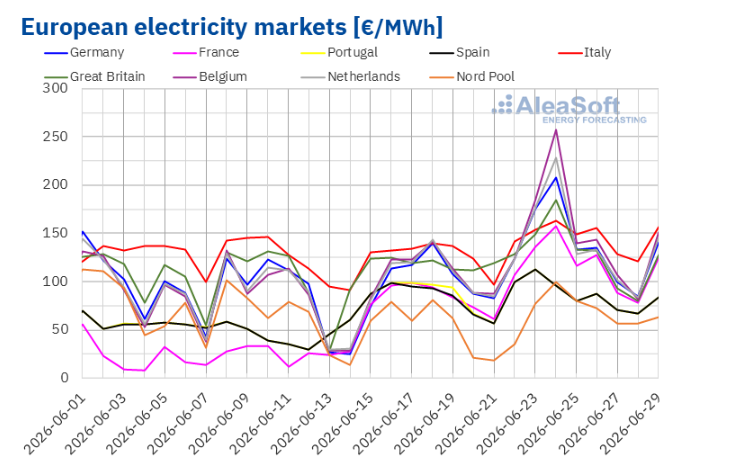
With temperatures soaring, electricity demand has increased rapidly, particularly due to higher cooling and air-conditioning loads. As a result, wholesale electricity prices across several major European markets have surged in recent days.
According to data from energy analytics provider AleaSoft Energy Forecasting, weekly average electricity prices in several key markets — including Belgium, the United Kingdom, Germany, France, Italy, and Spain — exceeded €115/MWh during the heatwave period. Belgium recorded one of the highest weekly averages at around €148/MWh, while Italy remained close to €115/MWh.
Key factors behind the price increase
During extreme heat events, the European power system faces multiple simultaneous pressures:
Rapid increase in electricity demand due to cooling needs
Reduced wind power generation in several regions due to low wind conditions
Temporary output limitations in thermal and nuclear plants caused by cooling constraints
Solar PV generation remains strong during daytime but cannot fully cover evening peak demand
The combination of these factors has led to tighter supply-demand balance and significant short-term price volatility in wholesale electricity markets.
Growing impact of climate-related events on energy markets
Energy analysts note that weather-driven price fluctuations are becoming increasingly common in Europe. Extreme heat not only increases short-term electricity costs but also highlights structural challenges in power systems undergoing rapid renewable energy integration.
While electricity demand is expected to normalize after the heatwave subsides, market volatility is likely to remain a key feature of the European energy landscape.
Implications for the renewable energy sector
This event once again highlights the growing link between climate conditions and electricity demand patterns.
In this context, solar PV, energy storage, and flexible grid solutions are playing an increasingly important role in maintaining system stability. Solar energy helps support daytime demand, while battery storage can help shift excess daytime generation to evening peak periods.
As energy markets become more volatile, there is growing demand for solar mounting systems that deliver:
Higher system reliability under extreme weather conditions
Faster and more efficient installation
Optimized land use and energy yield
Long-term structural stability and reduced maintenance costs
WOCHN Perspective
As a solar mounting system manufacturer, WOCHN continuously monitors global energy market trends and their impact on PV system design and performance.
In a context of rising temperatures and increasing grid stress, the reliability, structural strength, and installation efficiency of solar mounting systems are becoming more critical than ever for long-term project success.